
Views: 0 Author: Site Editor Publish Time: 2026-10-26 Origin: Site


An 8kW solar system defines a highly common, mid-to-large tier residential and light-commercial threshold. Engineered correctly, this capacity offsets significant utility costs. Property owners frequently encounter a discrepancy between the nameplate capacity of the hardware and the actual energy yield measured in kilowatt-hours. Failing to understand this distinction creates the risk of under-sizing the array. This leaves high-draw appliances like heat pumps or electric vehicles reliant on the grid. Conversely, over-capitalizing on unnecessary capacity without adequate battery storage wastes capital. Evaluating an 8kW setup requires analyzing daily consumption profiles, geographic solar irradiance, hardware selection, financial incentives, and system architecture. We establish a framework here to match hardware specifications directly to your site conditions and daily load requirements.
Production Reality: An 8kW solar system typically generates between 30 to 45 kWh per day, heavily dependent on local peak sun hours, seasonal variations, and system efficiency.
Load Capabilities: Comfortably powers baseline household loads (refrigeration, lighting, electronics) while supporting managed usage of high-draw appliances (central AC, heat pumps, EV chargers).
Architecture Matters: The functional difference between a standard grid-tied setup and an 8kw hybrid solar system dictates whether the system can provide backup power during grid outages.
Component Quality: Long-term ROI relies heavily on selecting a bankable solar power system manufacturer and matching the correct solar module for power system and inverter technologies to the site's specific environmental conditions.
Financial Viability: Strategic utilization of federal tax credits, local rebates, and net metering policies can significantly reduce the gross cost and accelerate the payback period of an 8kW array.
Evaluating solar performance requires separating power from energy. The kilowatt (kW) rating denotes the peak power capacity under standard test conditions. An 8kW array produces a maximum of 8,000 watts of instantaneous power. Homes consume energy over time, measured in kilowatt-hours (kWh). Running a 1,000-watt appliance for one hour consumes one kilowatt-hour. The value of a solar array lies in the total kWh it generates throughout the day, month, and year. Installers size systems based on historical kWh consumption, not the square footage of the property.
Geographic location dictates actual energy yield. Solar professionals calculate daily production using peak sun hours. This metric measures the equivalent number of hours per day when solar irradiance reaches 1,000 watts per square meter. The baseline calculation multiplies the 8kW capacity by local peak sun hours and applies a derate factor for efficiency losses.
High-irradiance regions receive five to six peak sun hours daily. This allows an 8kW array to generate 40 to 45 kWh. Low-irradiance regions average three to four peak sun hours, reducing daily output to 25 to 30 kWh. Seasonal variability impacts these figures heavily. Winter months bring shorter days, lower sun angles, and increased cloud cover. System sizing accounts for this winter deficit to prevent heavy reliance on grid power during colder months. Installers often tilt panels to optimize for winter sun angles if winter loads are high.
No solar array operates at 100% efficiency. Real-world conditions introduce unavoidable energy losses known as derating factors. Temperature coefficients play a major role. Solar panels lose efficiency as surface temperatures rise above 25 degrees Celsius. In hot climates, thermal losses reduce output by 10% to 15% during peak afternoon hours.
Additional losses stem from environmental soiling, such as dust, pollen, or snow accumulation on the glass. DC-to-AC conversion through the inverter accounts for a standard 3% to 5% efficiency drop. Voltage drop across long wiring runs adds minor losses. A well-designed system operates with a derate factor of 0.80 to 0.85. It converts 80% to 85% of its theoretical maximum into usable AC power.
Loss Factor | Typical Efficiency Reduction | Mitigation Strategy |
|---|---|---|
Temperature Coefficient | 8% - 15% | Select panels with low temperature coefficients (e.g., Heterojunction). |
Inverter Conversion | 3% - 5% | Use high-efficiency string or microinverters. |
Soiling and Dust | 2% - 7% | Schedule bi-annual cleaning in dry climates. |
Wiring Voltage Drop | 1% - 3% | Upsize DC and AC wire gauges for long conduit runs. |
A standard 2,000 to 2,500 square foot home utilizing natural gas for space heating, water heating, and cooking maintains a relatively low electrical demand. These homes consume electricity primarily for lighting, refrigeration, entertainment, and intermittent air conditioning. An 8kW array easily achieves a 100% energy offset in this scenario. The system generates surplus power during the day. This surplus exports to the grid or charges on-site batteries, covering nighttime consumption effortlessly.
Electrification shifts the energy burden entirely to the solar array. Homes equipped with electric heat pumps, induction stoves, and electric water heaters present a high baseline load. When these appliances operate simultaneously, instantaneous demand exceeds the 8kW threshold. The system significantly offsets total consumption, but a fully electrified home in a climate with extreme temperature swings requires careful load management. Homeowners often install smart electrical panels to shed non-critical loads during peak usage times.
Integrating an electric vehicle alters household consumption drastically. A daily 40-mile commute requires 10 to 12 kWh of charging energy. This single load consumes 25% to 35% of an 8kW system's average daily production. Homeowners schedule charging sessions during peak solar hours to maximize self-consumption. If charging occurs overnight, the home pulls heavily from the grid unless supported by a substantial battery bank. Level 2 chargers draw high amperage, requiring dedicated 50A or 60A circuits.
An 8kw solar power system effortlessly handles the continuous, low-draw baseline loads of a modern home. During daylight hours, the array powers these essential devices without pulling from the grid. The inverter processes the DC power from the roof and feeds the main electrical panel directly.
LED lighting fixtures across the property
Wi-Fi routers, modems, and smart home hubs
Energy-efficient refrigerators and freezers
Standard televisions, laptops, and desktop computers
Security cameras and alarm systems
Ceiling fans and ventilation equipment
Energy-intensive appliances require strategic operation to maximize solar benefits. Devices like electric ovens, washing machines, clothes dryers, and dishwashers pull significant wattage, often between 1,500W and 4,000W each. An 8kW array powers these loads comfortably, provided they do not run simultaneously. Load shifting ensures these appliances consume free solar energy rather than expensive utility power. Running the dishwasher mid-day utilizes peak solar production.
Heavy loads test the limits of residential solar. A standard 3-ton central air conditioning unit draws 3,000W to 4,000W continuously. Startup surges demand even more power. Level 2 EV chargers pull between 7,600W and 9,600W. If an EV charger and a central AC unit activate simultaneously, the combined demand exceeds the 8kW generation capacity. In standard setups, the grid instantly supplies the deficit. In off-grid or backup scenarios, heavy loads require soft-start devices on AC compressors to prevent inverter overload.
Grid-tied systems remain the most common and straightforward architecture. These setups connect directly to the utility grid, utilizing net energy metering (NEM) policies. During peak production, surplus solar energy flows back into the grid, earning credits. At night, the home pulls power from the grid, using those credits to offset the cost. The grid acts as a massive, virtual battery. Grid-tied systems feature a critical limitation. They automatically shut down during utility outages. This anti-islanding safety feature prevents the solar array from back-feeding electricity into power lines while utility workers perform repairs.
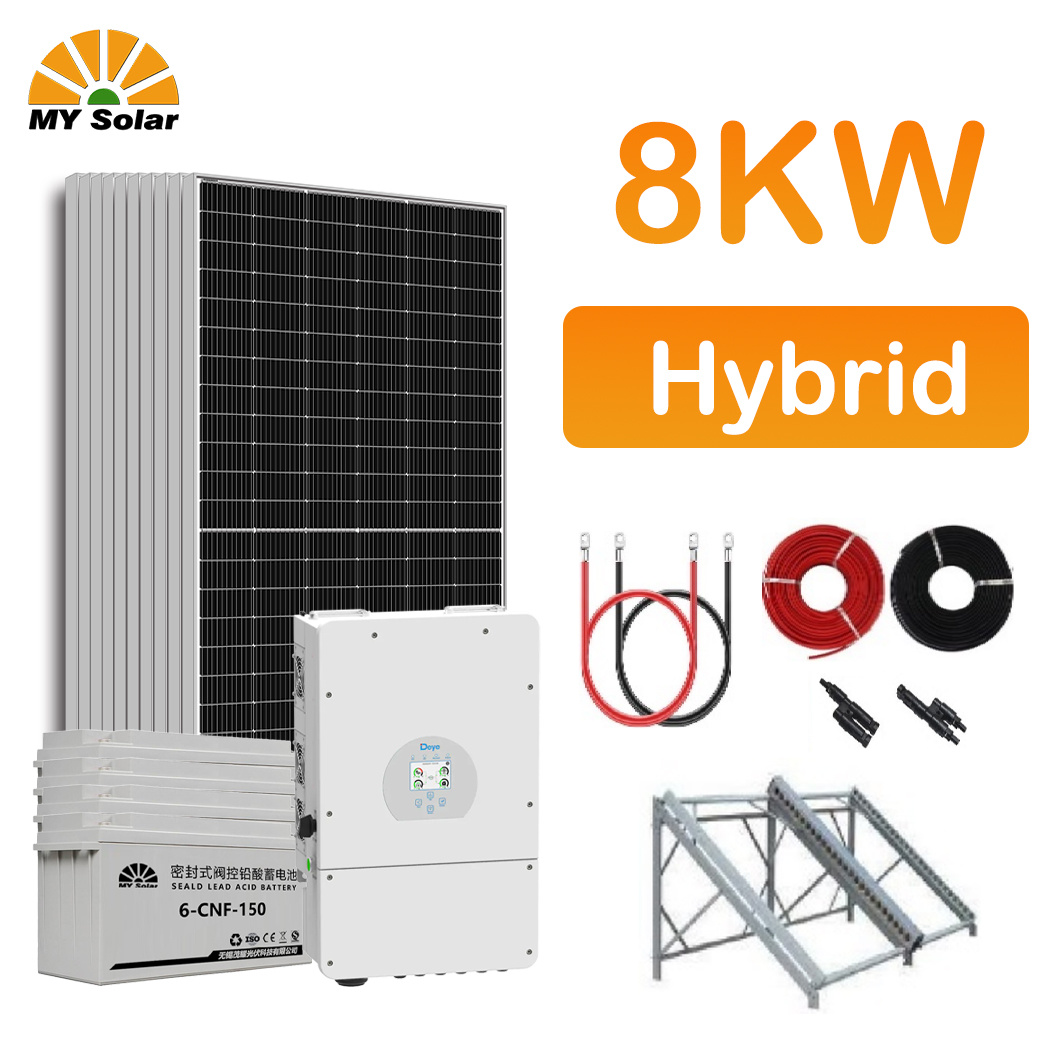
To achieve true resilience, property owners deploy hybrid architectures. This setup integrates physical battery storage alongside the grid connection. A hybrid inverter directs solar power to the home first, then charges the battery bank, and only exports surplus to the grid once the batteries reach full capacity. Sizing the battery bank depends entirely on backup goals. A 10kWh battery covers critical loads like refrigeration and lighting overnight. A 20kWh to 30kWh bank provides extended autonomy, allowing the home to operate off-grid for days during prolonged outages.
Choosing between architectures involves balancing capital expenditure against energy independence. Grid-tied systems require less hardware, simplifying installation and accelerating the financial payback period. Hybrid systems demand a higher initial investment due to the cost of lithium-iron-phosphate (LiFePO4) batteries and specialized hybrid inverters. Hybrid setups provide unparalleled security against grid instability, rolling blackouts, and peak-hour utility rate spikes. They also allow for time-of-use arbitrage, discharging batteries when grid power is most expensive.
System Architecture | Grid Outage Performance | Hardware Complexity | Primary Benefit |
|---|---|---|---|
Standard Grid-Tied | Shuts down entirely (Anti-islanding) | Low (Panels + String Inverter) | Maximum ROI and simplicity |
Hybrid with Storage | Provides seamless backup power | High (Panels + Hybrid Inverter + Batteries) | Energy independence and resilience |
Off-Grid | Operates independently | Very High (Large Battery Bank + Generator) | Complete utility disconnection |
Panel selection dictates roof space utilization and long-term degradation. Technology types matter heavily. Monocrystalline PERC panels offer reliable baseline performance. Newer TOPCon and Heterojunction (HJT) modules deliver higher efficiency and better temperature coefficients, producing more power in extreme heat. Wattage density impacts design directly. Utilizing twenty 400W panels requires more mounting hardware and roof penetrations than deploying sixteen 500W panels. High-efficiency modules maximize output on constrained roof planes. Always verify the degradation warranty, aiming for panels that guarantee at least 85% output at year 25.
The inverter serves as the brain of the array, converting DC power from the panels into usable AC power. Selecting the correct solar inverter for power systems depends on site conditions. Standard string inverters work well for unshaded, uniform roof planes. If the roof experiences partial shading from trees or chimneys, string inverters paired with DC optimizers prevent a single shaded panel from dragging down the entire array's output. Microinverters offer similar shading mitigation by converting DC to AC at the panel level.
System designers utilize a specific DC-to-AC ratio. It is standard practice to pair an 8kW DC panel array with a 7kW or 7.6kW AC inverter. This slight oversizing ensures the inverter operates closer to its maximum efficiency curve for more hours of the day. It compensates for the natural derating factors of the panels without causing excessive clipping.
Hardware durability ensures the system survives its 25-year expected lifespan. Evaluate manufacturers based on their Tier 1 status, financial stability, and history of warranty fulfillment. A robust 25-year performance warranty on modules and a 10-to-15-year warranty on inverters offer necessary protection. Ensure the manufacturer maintains local distribution channels to facilitate rapid replacement of faulty components. Field technicians rely on accessible technical support when troubleshooting complex inverter faults or communication errors.
The gross investment required for an 8kW installation varies based on several critical factors. Hardware selection plays the largest role. Premium high-efficiency panels and hybrid battery architectures require a larger initial outlay than standard grid-tied string systems. Labor rates, local permitting fees, and site-specific complexities influence the final installation quote. Steep roof pitches, multiple roof planes, or required electrical panel upgrades add labor hours. Evaluating multiple contractor bids ensures competitive market rates and exposes any unnecessary upcharges.
Government incentives alter the financial viability of solar projects drastically. The Federal Solar Investment Tax Credit (ITC) allows homeowners to deduct a significant percentage of the total system cost from their federal taxes. This credit reduces the net investment effectively. Many states offer localized rebates, property tax exemptions, and Solar Renewable Energy Certificates (SRECs). SRECs allow system owners to sell the environmental attributes of their generated power back to utility companies. This creates an ongoing revenue stream that accelerates the payback period.
The method of financing impacts the long-term profitability of the system directly. Cash purchases yield the highest return on investment and the shortest payback period, as they eliminate interest payments. Solar loans allow homeowners to transition to solar with zero down payment, substituting their monthly utility bill with a fixed loan payment. Interest reduces the total ROI, but loans still lead to outright ownership. Power Purchase Agreements (PPAs) and solar leases offer alternative paths where a third party owns the system. These options generally provide the lowest long-term financial benefit to the homeowner.
An 8kW array requires substantial physical space. Depending on the exact dimensions and efficiency of the chosen modules, the system occupies approximately 400 to 500 square feet of contiguous roof area. South-facing roof planes offer optimal production in the Northern Hemisphere. If the primary roof faces east or west, the system experiences a slight reduction in overall yield. Installers mitigate sub-optimal azimuths by utilizing high-efficiency panels or slightly increasing the total DC capacity to offset directional losses. Structural assessments ensure the roof trusses can support the additional dead load of the racking and panels.
Shading represents the greatest threat to solar production. Even minor shading from a nearby tree branch or a vent pipe disrupts a standard string array severely. When one panel in a series string drops in voltage due to shade, the entire string drops to match that lower performance level. Mitigating this risk requires careful site analysis. Deploying microinverters or DC optimizers allows each panel to operate independently. This isolates the impact of localized shading and maximizes the output of the unshaded modules.
Solar hardware requires minimal ongoing maintenance, as there are no moving parts. Environmental buildup degrades performance over time. In dry, dusty climates, periodic panel cleaning restores lost efficiency. Homeowners schedule visual inspections to check for debris accumulation under the array or potential rodent damage to wiring. Installers use critter guards to prevent squirrels or birds from nesting under the panels. Panels easily last 25 years, but standard string inverters typically require replacement at the 12-to-15-year mark. Factoring this future replacement into the initial financial model prevents unexpected expenses.
Navigating regulatory hurdles demands patience. Before installation begins, contractors secure local building and electrical permits. Roof setbacks must comply with local fire codes, ensuring emergency personnel have clear access pathways. Following installation, the utility company grants Permission to Operate (PTO) through an interconnection agreement. Delays in the permitting or utility inspection phases stall project timelines significantly. Installers manage this paperwork, but homeowners must remain aware of the administrative timeline.
Guesswork leads to underperforming systems. Engaging professional solar system configuration support during the design phase eliminates sizing errors. Engineers utilize advanced software modeling tools to map the roof, simulate local weather patterns, and calculate precise shading impacts. Validating the system design against historical utility consumption data before procurement ensures the final installation meets exact energy goals. Proper configuration dictates wire sizing, conduit routing, and overcurrent protection, ensuring the system operates safely and efficiently.
Analyze 12 months of utility data to establish baseline kWh requirements.
Perform a remote roof assessment using satellite imagery to identify viable mounting planes.
Select hardware based on shading analysis and budget constraints.
Generate a single-line diagram for permitting and utility interconnection.
Finalize the installation schedule and procure materials.
Take the following actions to initiate your 8kW solar project:
Download your last 12 months of utility bills to calculate your exact annual kilowatt-hour consumption.
Measure your available, unshaded roof space to confirm you have the 400 to 500 square feet required for an 8kW array.
Determine your critical backup power needs to decide whether a standard grid-tied or hybrid battery architecture fits your property.
Contact a certified local installer to request a site audit and a detailed software production model based on your specific roof azimuth.
A: The gross investment depends heavily on hardware quality, labor rates, site complexity, and whether battery storage is included. Leveraging the Federal Solar Investment Tax Credit and local state incentives reduces the net financial burden significantly. Evaluating multiple contractor bids ensures you secure competitive market rates for your specific installation requirements.
A: An 8kW array typically consists of 16 to 24 panels. The exact number depends entirely on the wattage of the individual solar module. Using high-efficiency 500W panels requires only 16 modules, while using standard 400W panels requires 20 modules to reach the 8kW threshold.
A: Yes, during peak sunlight hours, an 8kW array easily offsets the continuous power draw of a standard central AC unit. Grid power or a robust battery storage system is required to handle the high-amperage startup surges and to run the AC during nighttime hours.
A: Battery sizing depends entirely on your backup requirements. A common pairing for an 8kW system is 10kWh to 20kWh of storage. This capacity covers critical household loads, such as refrigeration, lighting, and basic electronics, overnight or during temporary grid outages.
A: You need approximately 400 to 500 square feet of contiguous, unshaded roof space. The exact footprint varies based on the physical dimensions and efficiency ratings of the selected solar panels, as well as local fire code setback requirements.
A: The payback period generally ranges from 6 to 9 years. This timeline is heavily influenced by your local utility electricity rates, the structure of regional net metering policies, and the successful application of available federal and state tax incentives.
A: This practice involves the DC-to-AC ratio. Oversizing the DC panel array slightly relative to the AC inverter ensures the inverter runs at maximum efficiency for more hours of the day. It compensates for real-world panel efficiency losses caused by heat, wiring, and minor shading.


