
Views: 0 Author: Site Editor Publish Time: 2026-07-13 Origin: Site


Choosing between a solar sheet and a traditional solar panel is less about which technology looks newer and more about where the system must work. A rigid module may suit a permanent rooftop or ground array, while a lightweight, flexible format can be more practical on curved, mobile, or weight-sensitive surfaces.
The decision also affects usable output, mounting, cooling, maintenance, and long-term cost. Understanding these trade-offs helps buyers compare both options against their available space, structural limits, energy demand, and future servicing needs rather than relying on advertised wattage alone.
For a permanent home, farm, warehouse, or ground-mounted array, a traditional solar panel is usually the practical starting point. Its rigid frame suits established racking, supports rear ventilation, and keeps individual modules accessible for inspection or replacement. Fixed layouts are also easier to expand when electricity demand grows.
A solar sheet becomes valuable when flexibility or low mass solves a physical constraint. Curved vehicle roofs, marine surfaces, portable systems, lightweight shelters, and equipment with limited structural capacity may not accept framed modules. Vehicle-integrated PV applications place particular importance on weight, size, flexibility, vibration resistance, reliability, and maintenance, which explains why the most suitable format varies by application.
Flexibility is not automatically a performance advantage. Buyers should first ask what prevents a standard module from working. When the answer is curvature, weight, portability, or mounting height, a solar sheet deserves serious consideration; when no such obstacle exists, rigid construction often offers the simpler ownership path.
Decision Factor | Solar Sheet | Traditional Solar Panel |
Format | Thin, lightweight, flexible or semi-flexible | Rigid, framed module |
Best surface | Curved, mobile, or load-sensitive | Flat or suitably angled fixed structure |
Main value | Low mass and surface conformity | Predictable fixed-array performance |
Mounting | Adhesive, bonded, clipped, or integrated | Roof or ground racking |
Cooling | Often close to the supporting surface | Usually allows rear airflow |
Maintenance | Depends on bonding and access | Individual modules are easier to reach |
Expansion | Often application-specific | Usually easier to expand |
Typical use | RVs, boats, equipment, temporary sites | Homes, farms, businesses, fixed systems |
Nameplate wattage alone cannot determine which product is better. A small solar sheet and a high-output rigid module may differ greatly in area, mass, temperature, and intended use, so comparing their watt figures confuses product size with system performance. The relevant question is how much energy the complete array can produce on the available surface.
Watts per square meter matter when roof area is limited, while watts per kilogram matter when added mass affects structure, transport, fuel use, or portability. Expected annual kilowatt-hours then connect laboratory ratings with sunlight, orientation, shading, and operating conditions. A lightweight product may offer a strong power-to-weight ratio yet require more surface area, whereas a large rigid module may use area efficiently but exceed the load limit of a lightweight roof.
Real yield depends on installation conditions. A solar sheet bonded to a warm metal roof may have less cooling airflow than a framed module mounted above the surface, making temperature coefficient data relevant to expected production. Tilt, orientation, partial shade, dirt, wiring losses, and module mismatch can further separate actual energy from nameplate output.
Flexible does not mean foldable without limits. Sharp bending or repeated creasing may stress cells, conductors, encapsulation, or edge seals, so the specified bend direction and minimum radius must be followed. Flexible and semi-flexible mat-style products are commonly adhesive-mounted, while rigid glass modules generally use brackets; each construction therefore faces different thermal, mechanical, and repair conditions.
Start with average daily consumption, peak load, available area, local peak-sun hours, and expected losses. Off-grid designs must also include battery capacity, charging current, inverter efficiency, and the number of low-sun days the system must cover. Grid-connected projects can focus more heavily on annual generation and usable roof or ground area.
Estimated daily energy = array wattage × peak-sun hours × system-loss factor
The loss factor should reflect temperature, shading, dirt, wiring, conversion, and battery losses where applicable. This calculation is an initial planning tool, not a guarantee, but it prevents a common mistake: comparing one small flexible module with one large conventional panel. Build two arrays for the same energy target, then compare their area, weight, mounting, and cost.
A solar sheet delivers the most value where ordinary racking is impractical. Curved RV roofs, boats, refrigerated bodies, portable shelters, and mobile equipment may benefit from a low-profile module that avoids heavy frames or excessive mounting height. RVs, buses, delivery fleets, commercial vehicles, transport refrigeration units, and marine equipment are among the applications where available area, surface curvature, weight, and auxiliary power demand can make integrated PV useful.
Installation still requires careful engineering. Buyers should verify the supporting material, approved adhesive or fastener, surface preparation, bend radius, drainage, sealing, cable routing, fire rating, and electrical protection. Moving systems also need resistance to vibration and impact, while marine projects may require salt-mist resistance and clear guidance on whether the surface is walkable.
Removal should be considered before bonding begins. A strong adhesive may improve attachment but make later access to the module underside or roof difficult. Segmented layouts, replaceable mounting layers, and accessible cable exits can reduce the repair consequences of local damage.
Rigid modules fit projects with a sound roof or suitable ground area, adequate structural capacity, and room for conventional supports. Their standardized shape simplifies array layout, wiring, row spacing, inspection, and later expansion. Rear access also helps technicians examine connectors, clamps, frames, and the surface beneath the array.
The structure must still be assessed for remaining roof life, attachment points, wind uplift, snow load, drainage, seasonal shading, and safe maintenance access. Electrical design should confirm module voltage and current, inverter input limits, string length, grounding, and battery or charge-controller compatibility. Traditional installation is simpler only when these conditions have been verified.
Purchase price is only one part of the decision. A fair comparison includes racking or adhesive, surface preparation, wiring, protection devices, inverter or charge controller, labor, structural reinforcement, transport, and future removal. Specialty sheets may reduce support weight but require application-specific bonding materials, while large glass modules may increase handling and logistics demands.
Installed cost per watt is useful, but expected annual generation and lifetime kilowatt-hours provide a better view of value. A low-priced product can become expensive if heat, shade, restricted area, or poor orientation keeps it from meeting the load. Conversely, a higher-priced solar sheet may be economical when it avoids reinforcement or enables production on a surface that would otherwise remain unused.
Keep the quotation boundaries consistent. If one option includes roof integration while another requires a new support structure, include both scopes. The objective is not the lowest module price; it is the lowest lifetime cost among systems capable of delivering the required energy.
Bonded construction changes how technicians access the system. Junction boxes, cable exits, edges, and the supporting surface should remain inspectable wherever possible. Buyers should ask whether one damaged sheet can be removed independently, whether adhesive residue can be cleared safely, and whether replacement will disturb surrounding material.
Cleaning requirements also affect ownership cost. Abrasive tools, unsuitable chemicals, or walking on an unsupported laminate may cause damage. Rigid modules normally separate the active surface, frame, mounting system, and roof more clearly, although they still require safe access and appropriate cleaning methods.
Durability evidence should match the operating environment. Relevant tests may cover UV exposure, moisture, thermal cycling, vibration, impact, salt mist, corrosion, delamination, edge sealing, and cable strain. Vehicle applications introduce repair-access, UV, vibration, and impact challenges beyond stationary PV, while thin-film technologies generally require effective environmental protection for long outdoor service.
Product and performance warranties should be read separately. One may cover construction defects, while the other describes retained output over time; exclusions, installation rules, labor responsibility, and claim procedures determine their practical value. Silicon modules are commonly designed for operating lives of 25 years or more while retaining a substantial share of their original power, but buyers must confirm the exact terms for the selected model.
1. Surface: Is it flat, curved, moving, hot, or weight-limited?
2. Energy: How many daily kilowatt-hours and how much peak power are required?
3. Space: Is usable area or allowable mass the tighter constraint?
4. Mounting: How will the module be secured, cooled, sealed, drained, and wired?
5. Ownership: Can it be inspected, cleaned, replaced, and expanded without major reconstruction?
Each answer should change the specification sent to a supplier. A curved vehicle roof needs bend limits, vibration data, dimensional templates, and an approved attachment method; a farm or commercial array needs structural loading, site layout, string design, and service access. Choose a solar sheet when weight or shape determines feasibility, and choose a traditional solar panel when conventional racking, predictable output, ventilation, and module-level service matter more.
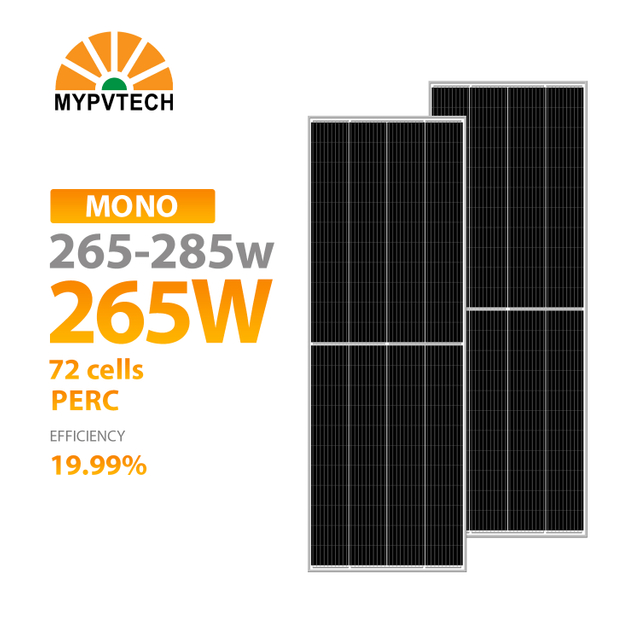
Mysolar offers Mono P-Type modules covering rated outputs from 600W to 700W, with TUV and CE certification, standard mounting, and applications that include residential, commercial, grid-connected, and off-grid systems. These specifications provide a useful starting point for selecting a rigid module, but the exact model still needs to be matched with the array design, supporting structure, and electrical equipment.
High-output modules may reduce the unit count needed for a target array, but dimensions, weight, voltage, current, temperature coefficients, load ratings, connectors, and inverter limits still control the design. A separate Mysolar 144-cell half-cell module covers the 700W–720W power range. Current mechanical, electrical, certification, and warranty documents should be confirmed before advertised wattage is treated as a final project specification.
A traditional solar panel is generally better suited to permanent residential, commercial, agricultural, and ground-mounted systems, while a solar sheet makes more sense where low weight, portability, or a curved surface limits conventional installation. The final choice should reflect usable output, mounting conditions, maintenance access, durability, and lifetime cost rather than advertised wattage alone. MY Solar Technology Co., Ltd. supplies solar modules and related energy-system products that can help buyers match panel specifications with available space, structural limits, and power requirements, supporting a more practical and efficient system design.
A: A solar sheet is better for curved, mobile, or weight-sensitive surfaces. A traditional solar panel is generally more practical for permanent systems requiring standardized mounting and easier maintenance.
A: Performance depends on cell technology, surface area, temperature, orientation, and airflow. Bonded sheets may operate hotter, so buyers should compare actual system yield rather than wattage alone.
A: Service life varies by construction and exposure. UV radiation, moisture, vibration, impact, edge sealing, and installation quality can influence how quickly flexible modules degrade.
A: Yes, provided the roof material, load capacity, drainage, fire rating, adhesive method, ventilation, and electrical design meet the module manufacturer’s installation requirements.
A: Rigid panels are usually easier to inspect, replace individually, and add to later. Bonded solar sheets may require more work to remove without damaging the supporting surface.


