
Views: 0 Author: Site Editor Publish Time: 2026-07-20 Origin: Site


At a large power station, a small increase in output can translate into substantial additional generation across thousands of modules. Bifacial technology creates that opportunity by allowing each Solar Panel to use reflected light on its rear surface as well as direct light on the front. The result, however, depends heavily on ground reflectivity, module height, row spacing, structural shading, and tracker design. This article examines where the extra yield comes from, how site design affects it, and when the added energy is sufficient to improve lifetime project economics.
The front of a bifacial Solar Panel converts direct and diffuse irradiance like a conventional module. Its transparent rear construction also exposes the cells to light reflected from the ground and nearby surfaces. This extra input raises total energy production without requiring a proportionally larger footprint, which is valuable on permitted sites where land or interconnection capacity is constrained.
Three measurements must remain separate. Front-side efficiency describes how effectively the illuminated front converts incident light under stated test conditions. The bifaciality factor compares rear-side electrical performance with front-side performance under equivalent irradiance. Bifacial energy gain is a system-level outcome: the additional kilowatt-hours produced after site conditions, layout, weather, and operating losses are included. Standardized bifacial testing procedures also distinguish a measured rear-side electrical rating from a guaranteed field-yield percentage.
For a utility developer, annual output matters more than an attractive datasheet percentage. A five-percent gain across a multi-megawatt plant can materially affect contracted delivery and lifetime revenue. The correct comparison is additional annual megawatt-hours under realistic conditions, not an assumed increase in Solar Panel nameplate capacity.
Rear-side irradiance does not always follow the same pattern as direct front-side sunlight. Reflected and diffuse light can contribute in the morning, late afternoon, winter, and overcast periods, potentially widening the daily production profile rather than merely lifting the noon peak. Bifacial collection can therefore change the timing of production as well as total yield.
That broader curve can influence inverter loading, battery-charging windows, grid schedules, and power purchase agreement performance. Extra DC production may also increase clipping if inverter capacity and the DC-to-AC ratio are not assessed together. A bankable study should therefore model the full annual generation curve instead of applying one optimistic gain factor to a monofacial baseline.
Albedo is the share of incoming light reflected by the surface beneath the array. Pale soil, light gravel, sand, concrete, and snow generally return more irradiance toward the rear of a Solar Panel than dark soil or dense vegetation. The value changes as rainfall, dust, plant growth, erosion, standing water, and seasonal snow alter the ground. Because performance models often represent complex reflection patterns with a single albedo value, the input should resemble actual site conditions rather than an ideal surface.
Ground-mounted bifacial modules may deliver gains below 10% when albedo is approximately 0.25. Under suitable conditions, increasing albedo to around 0.5 and elevating modules by one metre can raise the modelled gain considerably, potentially approaching 30%. These figures demonstrate sensitivity rather than a universal promise because climate, orientation, geometry, and shading remain project-specific.
Bright gravel, membranes, or modified vegetation management may improve reflection, but each option brings installation and maintenance costs. The preferred surface is the one that creates durable net value rather than the highest short-term reflectance.
Elevation gives reflected light room to spread before reaching the rear surface. Greater height can improve irradiance uniformity, but it may also increase steel use, foundation loads, wind exposure, and installation complexity. Wider row spacing reduces inter-row shading and exposes more ground to sunlight; tighter spacing places more Solar Panel capacity on each hectare.
Ground-cover ratio connects these choices by comparing module-covered area with total array area. A lower ratio may support rear-side collection, yet excessive spacing reduces land-use efficiency and lengthens cable runs. The layout with the highest bifacial percentage is therefore not necessarily the one with the lowest levelized cost.
Torque tubes, rails, posts, junction boxes, and cable trays can cast repeated rear-side shadows. Average irradiance may appear acceptable while localized darkness creates mismatch within a module or string. Mechanical and electrical teams should assess the module, structure, cable routing, bypass-diode arrangement, and string design as one system.
An array design diagram should show front irradiance, reflected rear light, module height, tilt, row spacing, ground albedo, torque-tube shadow, and adjacent-row shading. Together, these labels show that rear yield comes from array geometry, not from the Solar Panel alone.
Single-axis trackers can improve front exposure while maintaining rear clearance. Bifacial modules paired with single-axis tracking have become a leading utility-scale configuration in many regions and can offer a highly cost-effective arrangement under suitable site conditions. Local climate, terrain, equipment design, and operating strategy still determine actual performance.
Tracking is not automatically superior. Strong winds, uneven terrain, limited maintenance capability, or a preference for mechanical simplicity may favor fixed tilt. Tracker algorithms, backtracking, stow positions, availability, and extreme-weather response also belong in the yield and risk model. Model consistency, algorithm transparency, and standardized weather responses remain important when comparing different tracking proposals.
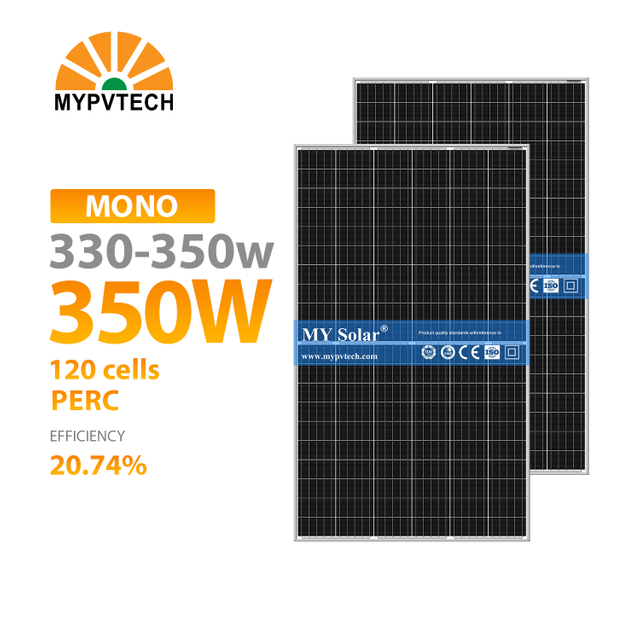
A large PV station already requires permitting, land preparation, roads, foundations, fencing, collection cables, monitoring, substations, communications, and grid interconnection. When rear-side generation increases output from the same permitted array, part of that gain uses infrastructure already being financed.
The value depends on the binding constraint. A land-limited project may benefit from more energy per hectare, whereas an interconnection-limited plant gains only when extra DC production fits within export and curtailment conditions. A higher-yield Solar Panel can improve site revenue, but clipping, congestion, or negative-price periods may reduce the value of incremental electricity. Design, performance, risk, and economics should therefore be managed as an integrated system.
Comparing quotations only by module price per watt misses the investment question. Levelized cost of electricity divides lifetime project cost by lifetime energy delivered. A useful model includes modules, racking, foundations, tracker equipment, installation, financing, degradation, availability, soiling, clipping, curtailment, and the expected sale value of electricity.
Decision factor | Bifacial system | Monofacial system | Project question |
Energy capture | Front and rear | Front only | What rear-side gain is defensible? |
Layout sensitivity | High | Moderate | How do height and spacing affect land use? |
Yield modelling | More site-dependent | More established | Are assumptions suitable for financing? |
Initial cost | May be higher | Usually simpler | Does lifetime generation offset the premium? |
LCOE potential | Strong on suitable sites | Predictable baseline | Which design delivers lower lifetime cost? |
A higher-priced Solar Panel can reduce LCOE when incremental energy exceeds the added capital and operating cost. The reverse is also true: a strong theoretical gain has little value if it demands excessive spacing, costly surface treatment, or a tracker configuration with lower availability. Procurement teams should compare complete plant designs rather than isolated module offers.
Develop at least three scenarios: a conservative rear-side case, an expected site-specific case, and an optimized but achievable case. Each should use consistent assumptions for weather, albedo, terrain, height, spacing, structural shading, tracker behavior, soiling, mismatch, degradation, clipping, curtailment, and plant availability. Albedo, bifaciality, hub height, and rear-surface transmission should all be included when assessing performance uncertainty.
P50 provides a central production estimate, while P90 offers a more conservative view of downside risk. Sensitivity analysis is more informative than one headline gain because it reveals which assumptions could weaken financing. Pilot rows, calibrated front and rear irradiance sensors, reference modules, and early operating data can then test the model. Consistent prediction methods and validated operating datasets further reduce uncertainty during investment review.
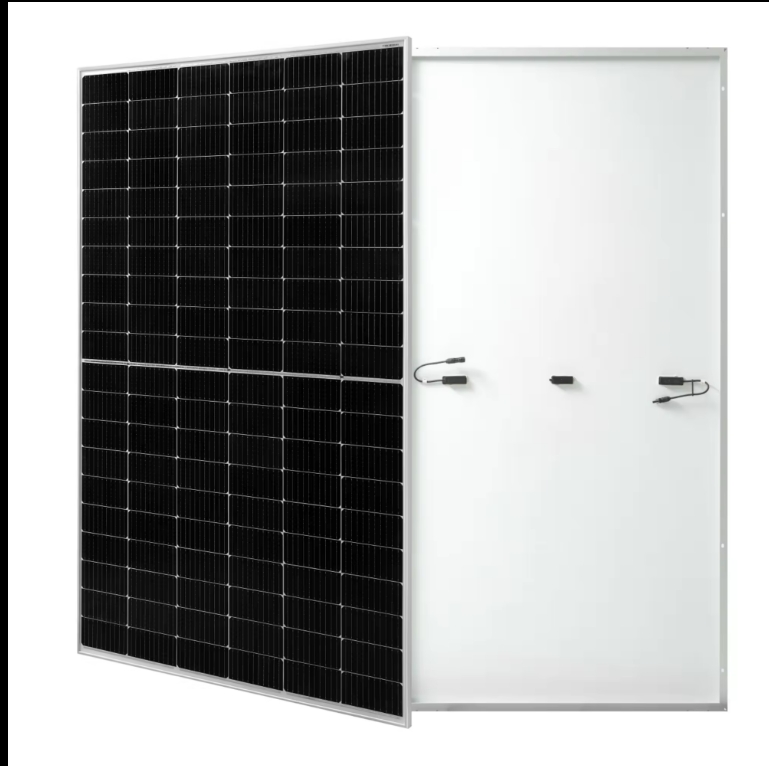
Front-side wattage is only one procurement input. Developers should compare bifaciality, rear-side rating method, efficiency, temperature coefficient, dimensions, weight, glass and frame construction, mechanical-load limits, cables, connectors, degradation terms, and applicable certification. Because bifacial testing has additional requirements beyond monofacial measurement, tenders should request the test basis and independently verifiable electrical data rather than an unexplained rear-power claim.
Large-format modules may reduce unit count, but they can change tracker span, foundation design, wind response, container loading, lifting methods, crew productivity, and breakage risk. String voltage, current limits, inverter compatibility, connector selection, and rear-side current uplift also require review. The preferred Solar Panel is the one that fits the proposed structural and electrical architecture with acceptable lifetime risk.
A manufacturer may serve residential roofs, off-grid systems, commercial buildings, industrial facilities, and solar farms. Those products are not interchangeable merely because they use monocrystalline cells or similar efficiency ranges. Mysolar offers compact 450W modules alongside higher-output products intended for residential, commercial, industrial, and solar-farm applications.
That distinction matters in a utility tender. A compact format may help transport or smaller-system handling, but it should not be described as bifacial unless documentation confirms rear-side generation, bifaciality, and test conditions. Selection should start with plant geometry, tracker compatibility, electrical design, logistics, certification, and lifetime output—not the assumption that one wattage class suits every project.
Operations must preserve the conditions used in the financial model. Vegetation can darken the ground and shade rear cells; erosion, water pooling, dust, and construction changes can alter albedo. Tracker faults or repeated stow positions may also reduce front and rear collection even when the modules remain electrically sound.
Useful monitoring should include:
● Front and rear plane-of-array irradiance, periodic albedo checks, tracker position, and availability.
● String-level output, inverter clipping, soiling, vegetation condition, and recurring rear-shadow patterns.
● Expected-versus-actual bifacial gain supported by calibrated sensors and a documented baseline.
● Rear-glass inspection, connector checks, cable management, cleaning access, and checks for new obstructions.
Data should lead to corrective action rather than merely populate a dashboard. Monitoring and analytics can support predictive maintenance, real-time optimization, higher reliability, and lower operating costs. A procurement checklist should also confirm independent bifacial testing, site-specific albedo, structural shading, tracker and inverter compatibility, clipping, curtailment, and viability under conservative assumptions.
Bifacial technology delivers the greatest value when module design, ground reflectivity, row spacing, tracking, and long-term maintenance are considered as one system. For large power stations, the decision should rest on verified lifetime energy gains rather than front-side wattage alone. MY Solar Technology Co., Ltd. supplies solar panels and related power-station products that can support project-specific module selection, system matching, and long-term performance planning. By choosing a Solar Panel that fits the site’s structural and electrical requirements, developers can improve energy yield while keeping investment and operating decisions grounded in realistic data.
A: It generates electricity from both front-side sunlight and rear-side reflected light, increasing annual energy output without requiring a proportional expansion of the array footprint.
A: Gains may remain below 10% on low-reflectivity sites but can approach 30% when ground albedo, module elevation, spacing, and orientation are optimized.
A: Light-colored gravel, concrete, sand, and snow generally reflect more sunlight toward the rear cells than dark soil, dense vegetation, or shaded surfaces.
A: Single-axis trackers can improve front exposure and rear-side collection, but the economic benefit depends on terrain, albedo, row spacing, equipment cost, and tracker availability.
A: Benefits may be small when modules have little rear clearance, dark ground, heavy structural shading, narrow row spacing, or export limits that restrict additional generation.
A: Maintenance should control vegetation, dust, water pooling, rear-surface obstructions, and tracker faults because these conditions can reduce reflected light and expected bifacial gain.


