
Views: 0 Author: Site Editor Publish Time: 2025-09-08 Origin: Site


Solar energy has become one of the fastest-growing renewable energy sources worldwide, offering a clean, sustainable, and increasingly affordable alternative to fossil fuels. Within the solar industry, there are many types of panels available, ranging from large traditional solar panels installed on rooftops and fields to compact mini solar panels designed for small-scale applications. While both serve the same basic purpose of converting sunlight into electricity, their performance, applications, and benefits can differ greatly.
Understanding how mini solar panels compare to traditional solar panels in performance helps individuals and businesses make informed decisions about which solution best fits their needs.
Mini solar panels are small-scale photovoltaic panels designed to generate modest amounts of electricity. They usually range in power output from a fraction of a watt up to about 20 or 30 watts, making them ideal for low-energy devices and portable applications.
You’ll often find mini solar panels in:
Portable chargers for smartphones and tablets
Solar garden lights and decorative fixtures
Educational kits and DIY science projects
Remote sensors and monitoring equipment
Camping gear such as lanterns and fans
Their compact size and lightweight design make them portable and user-friendly, especially for outdoor enthusiasts or for applications that don’t require much power.
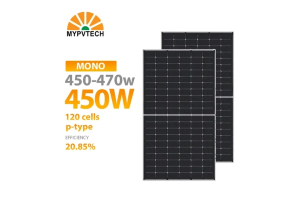
Traditional solar panels, also known as full-sized photovoltaic panels, are much larger and designed for high-power applications. They are the panels typically seen on rooftops, solar farms, and large commercial buildings. These panels generally have power ratings ranging from 250 watts to more than 600 watts, depending on their size, technology, and efficiency.
Traditional solar panels are commonly used for:
Residential rooftop solar systems
Commercial and industrial power generation
Off-grid cabins or homes
Large-scale solar farms feeding electricity into the grid
Unlike mini solar panels, traditional systems often require professional installation, supporting equipment such as inverters, charge controllers, and sometimes battery storage.
One of the most obvious differences between mini and traditional solar panels is size and portability. Mini solar panels are designed to be compact and lightweight, often small enough to fit in a backpack or attach to a tent. They can be carried anywhere and used on the go, making them perfect for travelers, campers, or hobbyists.
Traditional solar panels, however, are much larger and heavier. A single panel can measure over 1.6 meters by 1 meter and weigh around 20 kilograms or more. These panels are not portable and require permanent installation on rooftops or ground-mounted structures.
In terms of performance, this difference in size means traditional panels can generate significantly more electricity, while mini panels prioritize portability over output.
The power output is another area where the two differ significantly. Traditional solar panels are capable of producing hundreds of watts each, and when combined into a solar array, they can generate enough electricity to power an entire home or business.
Mini solar panels, on the other hand, are limited to smaller outputs. For example:
A 5-watt mini solar panel might be able to charge a smartphone slowly.
A 20-watt panel could charge a tablet, run a small LED light, or recharge a power bank.
This lower power capacity means mini solar panels are not suitable for running household appliances like refrigerators, air conditioners, or washing machines. Instead, they shine in powering small electronics and accessories.
Both mini and traditional solar panels use similar photovoltaic technology, often based on silicon cells. The efficiency of a solar panel refers to how much sunlight it can convert into usable electricity.
Traditional solar panels often have efficiencies ranging from 15% to over 22%, depending on whether they are polycrystalline, monocrystalline, or advanced technologies such as PERC or bifacial panels.
Mini solar panels typically have similar efficiency rates, but because they are smaller in size, the absolute amount of energy produced is much lower.
So, while a mini solar panel may be just as efficient in converting sunlight as a larger one, its limited surface area results in lower total energy output.
Mini solar panels are generally plug-and-play devices. They often come with built-in USB ports or connectors, allowing users to simply place the panel in the sun and charge their devices directly. They require no professional installation, no permits, and no additional equipment beyond possibly a rechargeable battery or power bank.
Traditional solar panels, however, require more complex setup. Installing a rooftop solar system involves mounting hardware, inverters to convert DC to AC electricity, electrical wiring, and sometimes battery storage for off-grid setups. Professional installers are typically needed, and the installation process can take days or weeks.
In terms of performance, mini solar panels excel in simplicity and user-friendliness, while traditional panels offer large-scale, long-term energy solutions.
Another key comparison is cost. Mini solar panels are relatively inexpensive, often costing between $10 and $100 depending on their size and features. For casual users who want a portable charging solution or a simple way to power small devices, the investment is affordable and practical.
Traditional solar panels, however, represent a much larger financial commitment. A complete residential solar system can cost thousands of dollars, though government incentives and long-term savings on electricity bills can offset the expense. Over time, traditional panels often prove to be more cost-effective for households and businesses looking to reduce or eliminate electricity bills.
Mini panels are best for low-budget, small-scale energy needs, while traditional panels are an investment in long-term energy independence.
Durability also plays a role in comparing performance. Traditional solar panels are built to withstand harsh outdoor conditions, including rain, wind, snow, and hail. They typically come with warranties lasting 20 to 25 years, ensuring decades of reliable performance.
Mini solar panels, while also designed for outdoor use, may not be as rugged or long-lasting. Many are made with lightweight materials to prioritize portability, which can make them more vulnerable to scratches, cracks, or weather damage. However, for their intended purpose, they still offer reliable performance when handled with care.
Traditional solar panels are often paired with large battery storage systems, such as lithium-ion batteries, to store excess energy for nighttime or cloudy days. This allows homes and businesses to maintain power even when the sun isn’t shining.
Mini solar panels may include small built-in batteries or be connected to portable power banks. While these storage options are limited, they provide enough backup power for small devices, ensuring functionality when sunlight isn’t available.
Both mini and traditional solar panels contribute to reducing carbon footprints by generating clean, renewable energy. However, their impact differs in scale.
Traditional panels significantly reduce household or business reliance on fossil fuels, leading to substantial reductions in greenhouse gas emissions.
Mini solar panels have a smaller environmental impact due to their limited energy output but still play an important role in reducing disposable battery usage and promoting eco-friendly practices.
In terms of performance, both are valuable tools in the fight against climate change, each addressing different scales of energy demand.
The answer depends on the intended use.
For powering a home, reducing electricity bills, and contributing to large-scale renewable energy goals, traditional solar panels are far superior in performance. Their high output, durability, and ability to integrate with the electrical grid make them the best option for long-term energy needs.
For travelers, campers, students, or anyone needing a simple, portable solution to charge small devices, mini solar panels perform exceptionally well. They may not produce much power, but they deliver convenience, portability, and sustainability where traditional panels are impractical.
In many ways, the two complement each other. A household may rely on a traditional solar system for major energy needs while individuals carry mini solar panels for personal, on-the-go electricity.
When comparing mini solar panels to traditional solar panels in performance, the differences primarily come down to scale, portability, and application. Traditional solar panels excel in generating large amounts of electricity, offering long-term solutions for homes and businesses, while mini solar panels provide practical, portable energy for small devices and outdoor adventures.
Both types share the common advantage of harnessing clean, renewable solar power, making them important tools in the shift toward sustainability. The choice between them depends not on which is “better” overall, but on which aligns best with specific needs. For large-scale, consistent energy supply, traditional panels are unmatched. For lightweight, on-the-go power, mini solar panels are the clear winner.
Ultimately, both play vital roles in expanding access to renewable energy and empowering individuals to embrace greener lifestyles.


